


How to Prepare for a Job Interview With a Gulf Company While Living in Egypt
Learn how to prepare for a Gulf job interview from Egypt, answer common Saudi employer questions, succeed in online interviews, and discuss salary and relocation.
For Egyptian professionals looking to advance their careers, Gulf countries offer opportunities across industries such as technology, finance, engineering, healthcare, sales, and human resources. Saudi Arabia, the United Arab Emirates, Qatar, and other regional markets attract candidates with different levels of experience, while online recruitment makes it possible to interview with employers without immediately traveling abroad.
However, securing a job interview is only the first step. Candidates need to understand the employer, demonstrate relevant experience, communicate their career goals, and prepare for questions about salary expectations, relocation, and availability. Technical preparation is equally important when the interview takes place online from Egypt.
This guide explains how to prepare for a job interview with a Gulf company, make a positive professional impression, and approach the recruitment process with confidence.
1. How Should You Research a Gulf Company Before the Interview?
Start by reviewing the company's official website, professional social media profiles, services, products, and recent announcements. Understanding its business helps you explain why you want to join the organization and how your experience could support its goals.
Read the job description carefully and identify the most important responsibilities and qualifications. For example, a sales position may require evidence of meeting revenue targets and managing customer relationships, while an accounting role may emphasize financial reporting, reconciliation, and compliance.
Prepare two or three examples that connect your previous achievements with the employer's requirements. Researching the company also helps you develop thoughtful questions about the role, team structure, and expectations.
Finally, verify that the vacancy and recruiter are legitimate. Be cautious if someone promises guaranteed employment in exchange for unexplained fees or requests sensitive financial information during the interview stage.
2. What Should You Know About Interviews With Saudi and Other Gulf Companies?
Recruitment interviews in Egypt and the Gulf share many common elements, including questions about professional experience, technical skills, teamwork, and problem-solving. Nevertheless, individual employers may have different priorities depending on their industry, organizational culture, and hiring requirements.
Interviews with Saudi companies may include questions about your ability to support the team's objectives, adapt to a multicultural workplace, and relocate if the position requires working on-site. Employers may also assess your understanding of their sector and the customers or business environment relevant to the role.
Do not assume every Gulf company follows the same interview format. You might speak with a recruiter, a hiring manager, a technical specialist, or a panel. Prepare for each conversation by understanding the role and communicating your qualifications clearly.
Rather than making general statements about your willingness to work abroad, explain how the position aligns with your experience and professional development goals.
3. How Can You Prepare Your CV for a Gulf Job Interview?
Review your CV before the interview and make sure you can explain every major responsibility, qualification, and achievement listed. Interviewers may ask follow-up questions about your previous positions, the tools you used, or the results you delivered.
Whenever possible, support your experience with measurable outcomes. Instead of saying that you improved team performance, explain what you changed, how you measured the improvement, and what happened as a result.
Prepare a concise explanation of your career history, including any employment gaps, career changes, or short periods in previous roles. Keep your answers professional and focus on relevant context rather than unnecessary personal details.
Check that your employment dates, job titles, qualifications, and other information are accurate and consistent. If you have recently completed a course or developed a new skill, explain how it supports the requirements of the position.
4. What Questions Should You Expect in a Gulf Job Interview?
The questions will depend on the role, but practicing common interview questions can help you organize your answers and avoid unnecessary hesitation.
You may be asked:
Tell us about yourself and your professional background.
Why do you want to work for our company?
What is your most relevant professional achievement?
How do you manage competing deadlines?
Why are you interested in working in the Gulf?
What are your salary expectations?
When would you be available to start?
Are you willing to relocate to our country?
What skills would you bring to this team?
Avoid memorizing long answers word for word. Instead, prepare key points and support them with real examples. A useful approach is to explain the situation, your responsibility, the action you took, and the result.
For example, if asked how you handle pressure, describe a genuine situation involving competing priorities and explain how you organized your work. This demonstrates your abilities more effectively than simply saying you work well under pressure.
When explaining why you want to work in the Gulf, focus on professional opportunities, industry experience, or the specific responsibilities of the advertised position.
5. How Do You Prepare for an Online Job Interview From Egypt?
Preparing for an online job interview involves more than testing your internet connection. You need a suitable environment, working equipment, and a clear understanding of the meeting arrangements.
Use this checklist before the interview:
Test your internet connection, microphone, camera, and headphones.
Install the required meeting application or check that it works in your browser.
Open the meeting link in advance and confirm that your audio and video settings work.
Choose a quiet location with suitable lighting and a clean background.
Silence notifications and close unnecessary applications.
Keep your CV, job description, and brief notes nearby.
Save the recruiter's contact details in case technical problems occur.
Join the meeting five to ten minutes early. Look at the camera when speaking, listen without interrupting, and speak clearly. If your connection fails, contact the recruiter through the agreed alternative channel and try to rejoin promptly.
Dress professionally, even if the interview takes place at home. Your appearance, surroundings, and communication style should reflect the same preparation you would bring to an in-person meeting.
6. How Should You Manage Time Differences Between Egypt and the Gulf?
Time-zone confusion can cause unnecessary stress or even lead to a missed interview. Egypt and Gulf countries do not necessarily follow the same local time throughout the year, so you should confirm the exact time zone stated in the invitation.
Check whether the recruiter has scheduled the meeting using Cairo time, Riyadh time, Dubai time, or another location. Convert the appointment to your local time and add it to your digital calendar with the correct time-zone setting.
Review the invitation again the day before the meeting. If the time zone is not specified, ask the recruiter to confirm it in writing.
Avoid relying on assumptions or informal messages when arranging an important interview. A short confirmation can prevent confusion and demonstrate that you are organized and attentive to detail.
7. How Should You Discuss Salary Expectations With a Gulf Employer?
Research salary ranges for your role, experience level, industry, and target country before the interview. Compensation can vary significantly between employers and positions with similar titles, so avoid relying on a single salary figure from an unrelated vacancy.
Consider the full compensation package, not only the basic salary. Depending on the employer and contract, benefits may include medical insurance, housing or transport allowances, and annual travel benefits. These are not guaranteed, so confirm what the specific offer includes.
If asked about your expectations, provide a realistic range based on your research and explain that you are open to discussing the complete package and responsibilities.
If you do not yet have enough information, you can politely ask about the salary range budgeted for the role. This helps you assess whether your expectations align with the employer's offer without committing to an arbitrary figure.
Before accepting a position, review the written offer and clarify the salary, benefits, working arrangements, and any conditions that affect your decision.
8. What Should You Say About Relocating From Egypt to the Gulf?
Employers may ask when you can relocate, whether you can work from their office, and whether you have any existing work authorization. Prepare an honest answer that reflects your circumstances and the time needed to make arrangements.
If you are currently employed in Egypt, explain your notice period and the earliest realistic date you could start. If relocation depends on official procedures, make this clear rather than promising an unrealistic start date.
Remember that receiving a job offer and completing the necessary immigration and employment procedures are separate steps. Requirements depend on the destination country and your circumstances, so verify the relevant official guidance rather than relying on informal promises.
If the employer offers remote work from Egypt, ask where the role is expected to be performed, how the employment arrangement will work, and whether any administrative or legal requirements apply.
Clear communication about relocation helps both parties understand the practical steps required before employment begins.
9. What Questions Should You Ask at the End of the Interview?
The end of the interview is an opportunity to demonstrate interest and learn more about the position. Prepare two or three questions that have not already been answered during the conversation.
Useful questions include:
What would success look like during the first three months?
What are the team's main priorities at the moment?
How is performance evaluated in this role?
What are the next steps in the recruitment process?
Choose questions that relate to the responsibilities and expectations of the position. Avoid asking questions simply for the sake of asking them, and do not focus exclusively on leave or benefits before understanding the job itself.
After the interview, consider sending a short thank-you message if appropriate. Express appreciation for the interviewer's time and briefly reaffirm your interest in the opportunity. If the recruiter provides a response date, wait until that date has passed before sending a polite follow-up.
10. What Mistakes Should You Avoid During a Gulf Job Interview?
Several common mistakes can weaken an otherwise strong application. Arriving late, failing to research the employer, giving vague answers, or struggling to explain information on your CV can raise concerns about your preparation.
Avoid exaggerating your achievements or claiming expertise in tools you have not used. If you do not know the answer to a technical question, explain your current understanding and describe how you would approach finding a solution.
Do not criticize previous employers or colleagues in an unprofessional way. When discussing a reason for leaving a job, focus on your career goals, responsibilities, or desire to develop relevant skills.
Finally, protect your personal information throughout the recruitment process. Verify the employer's identity before sharing additional documents, and be cautious about requests for payment or unnecessary financial details.
Frequently Asked Questions About Gulf Job Interviews From Egypt
Can I get a Gulf job without traveling for an interview?
Yes. Many employers conduct initial interviews and some technical assessments online. However, additional interviews, practical assessments, or in-person procedures may be required depending on the position and company policy.
Are interviews with Saudi companies different from interviews in Egypt?
Some employers may emphasize different industry requirements, relocation readiness, or familiarity with their business environment. However, professional experience, communication, and problem-solving remain important across many recruitment processes.
What should I wear for an online interview with a Gulf company?
Choose professional clothing appropriate for the role and the employer's workplace culture. Ensure your appearance is neat, the lighting is clear, and your background is free from distractions.
What should I do if I do not understand an interview question?
Politely ask the interviewer to repeat or clarify the question. Confirming what they mean is better than providing an answer that does not address their concern.
How can I verify whether a Gulf job offer is legitimate?
Check the company's official website, contact information, and recruitment channels. Review the written offer carefully and verify relevant employment procedures through official sources. Avoid paying unexplained recruitment fees or sharing sensitive information with unverified parties.
Conclusion
Preparing for a job interview with a Gulf company while living in Egypt requires research, clear communication, and practical planning. Understanding the employer, reviewing your CV, practicing relevant questions, checking your online interview setup, and preparing to discuss salary and relocation can help you present your experience professionally.
Start by identifying positions that match your qualifications, researching potential employers, and practicing answers based on real achievements. Consistent preparation can help you approach interviews with greater confidence and make informed decisions about your next career move.
Explore career opportunities and professional resources through Jadarat to support your job search in Egypt and across the Gulf region.
Other articles you may like

How to Prepare for a Job Interview With a Gulf Company While Living in Egypt
Learn how to prepare for a Gulf job interview from Egypt, answer common Saudi employer questions, succeed in online interviews, and discuss salary and relocation.
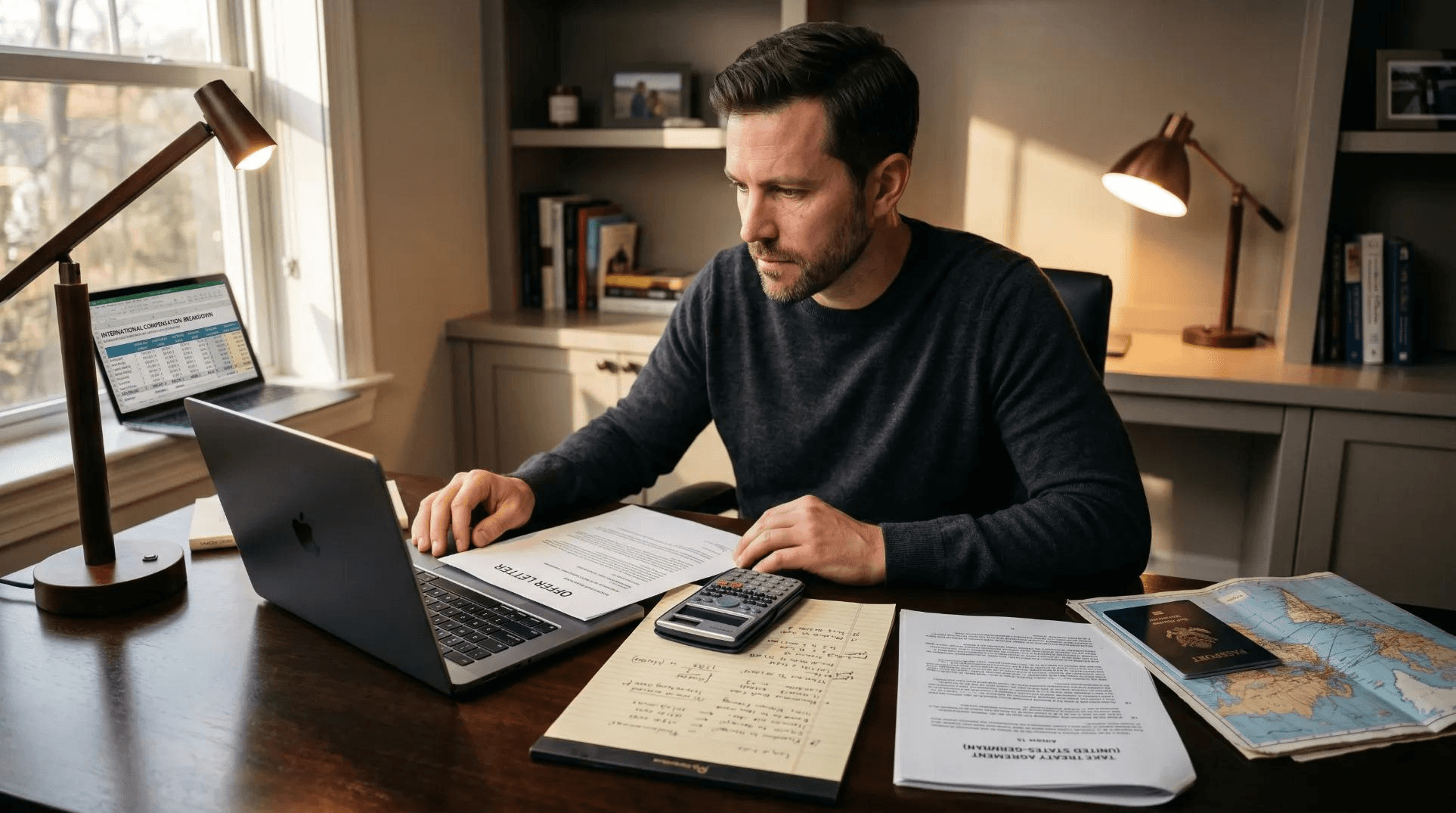
How to Determine the Right Salary Based on Your Experience and Industry
Learn how to determine the right salary for your experience and industry, compare salary ranges, and evaluate job offers with confidence.
How to Get Your First Job After Graduation With No Experience
Learn how to get your first job after graduation with no experience. Discover CV tips, job search strategies, essential skills, networking advice, and interview preparation for fresh graduates.