


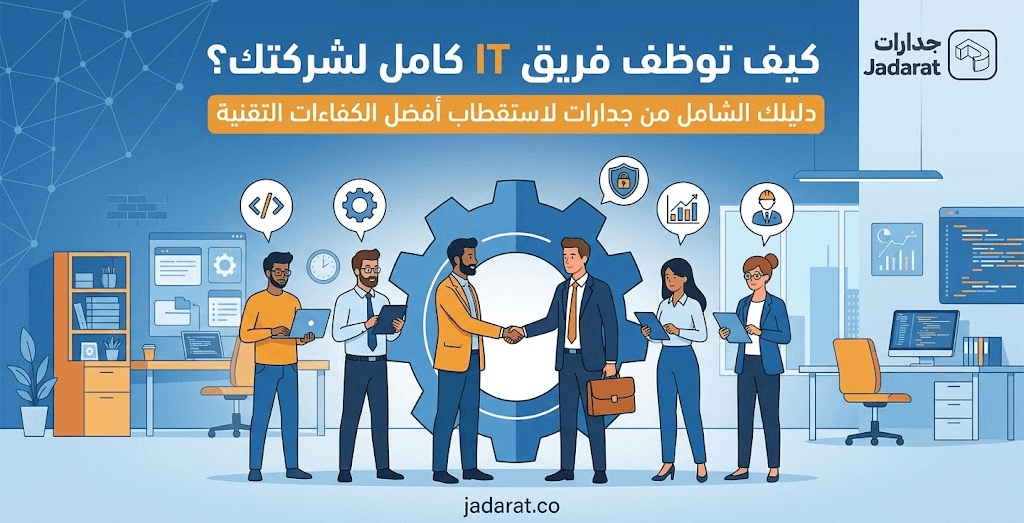
How to Hire a Complete IT Team for Your Company
Learn how to hire a complete IT team for your company, from defining technical roles and skills to sourcing, assessing, and hiring the right talent.
For many companies, technology is no longer a support function operating in the background. Software, cloud infrastructure, cybersecurity, data, internal systems, and technical support can all directly affect how a business operates and grows.
As your company expands, hiring one developer or one IT specialist may no longer be enough. You may need a complete IT team with different areas of expertise, from software development and infrastructure to cybersecurity, quality assurance, and technical leadership.
However, hiring a complete IT team requires more than publishing several job vacancies. You need to understand what the business actually needs, define each position, identify the required skills, and create a recruitment process that allows you to evaluate candidates consistently.
So, how should a company approach IT team recruitment?
What Does Hiring a Complete IT Team Mean?
Hiring a complete IT team means building a group of technology professionals whose responsibilities complement each other and cover the company's technical requirements.
The size and structure of the team will depend on the company's industry, size, technology stack, existing infrastructure, business model, and growth plans.
A small company may initially need:
A Software Developer
A Full Stack Developer
An IT Support Specialist
A DevOps or Cloud Engineer
A larger organization may also need:
IT Manager or CTO
Cybersecurity Specialist
QA Engineer
Network Engineer
Data Engineer or Data Analyst
System Administrator
There is no universal IT team structure. The goal is to identify the roles that are genuinely required for your business rather than hiring based on a standard organizational chart.
Which Roles Should an IT Team Include?
The right roles depend on the company's technical environment and business objectives.
IT Role | Main Responsibility |
|---|---|
CTO / IT Manager | Technology strategy and team leadership |
Software Developer | Building and maintaining software |
Full Stack Developer | Front-end and back-end development |
DevOps Engineer | Deployment, automation, and infrastructure |
Cloud Engineer | Cloud platforms and infrastructure |
Cybersecurity Specialist | Protecting systems and data |
IT Support Specialist | Supporting users and technical operations |
QA Engineer | Software testing and quality assurance |
Data Specialist | Managing and analyzing business data |
You do not necessarily need to hire every role at once. Some positions may be critical from day one, while others can be added as the company grows.
How Do You Determine How Many IT Employees You Need?
Start with your business requirements rather than job titles.
Ask questions such as:
Which systems does the business currently depend on?
Are you developing your own software or product?
Does the company use cloud infrastructure?
How much internal technical support is required?
Does the business handle sensitive or regulated data?
Do systems need to be monitored around the clock?
What technology projects are planned over the next 12 months?
Then divide the requirements into three categories: roles you need immediately, roles you will probably need later, and specialized work that could potentially be outsourced.
This approach helps prevent over-hiring while also reducing the risk of leaving important technical responsibilities uncovered.
How Should You Write IT Job Descriptions?
A strong technical job description should explain more than the job title and required years of experience.
It should clearly define:
Job title.
Main responsibilities.
Required technologies and frameworks.
Experience level.
Relevant qualifications or certifications.
English-language requirements where relevant.
Soft skills.
Work model: on-site, remote, or hybrid.
Reporting structure.
Expected objectives or outcomes.
For example, if you are hiring a Software Developer, saying "three years of experience" is not enough. Candidates should understand the technology stack, type of product, development environment, and level of responsibility involved.
Jadarat's guidance on technical recruitment also emphasizes evaluating the actual skills, technology experience, and practical background required for the role rather than relying only on a job title.
How Can You Find Qualified IT Candidates?
Companies can use several channels to source technology professionals, including:
Job boards.
LinkedIn.
Professional networks.
Employee referrals.
Recruitment agencies.
Internal recruitment teams.
Talent databases.
IT outsourcing providers.
However, receiving hundreds of CVs does not necessarily mean you have access to qualified candidates.
IT recruitment requires an understanding of the technical requirements behind each position. A recruiter should be able to distinguish between candidates based on their technology stack, project experience, level of responsibility, and practical exposure.
This is particularly important when hiring developers, cloud engineers, cybersecurity specialists, DevOps professionals, and technical managers.
How Should You Assess IT Candidates?
A standard interview may not provide enough information to evaluate a technical candidate.
Depending on the role, companies can use:
Technical interviews.
Coding assessments.
Practical assignments.
Case studies.
Portfolio or GitHub reviews where relevant.
Questions about previous projects.
Problem-solving exercises.
The assessment should reflect the actual job. A Backend Developer, Cybersecurity Specialist, and IT Support Engineer should not be evaluated using exactly the same technical criteria.
Soft skills should also be considered. Communication, collaboration, problem-solving, and adaptability can affect how effectively technical employees work with other departments.
Should You Hire the Entire IT Team at Once?
Not necessarily.
For many companies, phased hiring can be more practical. Start with the roles that directly support the current product, operations, or technology roadmap, then add specialized positions as requirements develop.
For example, a growing SaaS company might initially build a team around:
Technical Lead + Full Stack Developers + QA Engineer + DevOps Engineer
As the company grows, it may add dedicated cybersecurity, data, infrastructure, or internal IT support roles.
A larger organization with complex infrastructure or significant security requirements may need more specialized roles earlier.
The appropriate hiring sequence depends on the company's current operations and future technology roadmap.
When Should You Consider IT Outsourcing?
Not every technical responsibility requires a permanent employee.
IT outsourcing can be useful when a company needs specialized expertise for a specific project, temporary requirement, or function that does not justify a full-time position.
Examples include:
Cloud migration.
Cybersecurity assessments.
Software development projects.
Infrastructure management.
Technical support.
System implementation.
A hybrid model can also work: maintain core technology roles internally while outsourcing specialized or project-based requirements.
Jadarat currently offers IT recruitment and outsourcing services covering developers, infrastructure teams, and technology leadership roles.
How Can You Hire an IT Team in Egypt or for Gulf Companies?
The recruitment approach can vary depending on where the company operates and where the employees will be based.
Companies in Egypt can recruit local technology professionals for in-office, hybrid, or remote positions.
Gulf companies looking to recruit Egyptian talent may require a broader process that includes sourcing candidates in Egypt, CV screening, interviews, documentation, and coordination related to international employment, depending on the role and destination country.
Jadarat provides local recruitment services in Egypt and external recruitment services for companies in Saudi Arabia, the UAE, Qatar, Kuwait, Bahrain, and Oman.
This can be particularly relevant for companies that want access to Egyptian technology talent without managing every recruitment stage internally.
What Are the Common Mistakes When Hiring an IT Team?
Several mistakes can make technical recruitment slower or create gaps in the final team.
Hiring Based Only on Job Titles
A job title does not always explain the actual skills and responsibilities required.
Looking for One Person Who Can Do Everything
Combining too many technologies and responsibilities into one position can make it difficult to find candidates who genuinely match the requirements.
Ignoring Future Technology Needs
A team designed only around today's needs may struggle to support the company's growth later.
Focusing Only on Years of Experience
Years of experience do not automatically indicate the type or depth of practical experience a candidate has.
Overlooking Team Collaboration
Technical teams often work across development, infrastructure, security, QA, and business departments. Communication and collaboration therefore matter alongside technical skills.
How Can You Measure the Success of IT Recruitment?
After hiring, companies can monitor recruitment and workforce metrics such as:
Time to hire.
Time to fill.
Offer acceptance rate.
Employee retention.
Time to productivity.
Performance during the probation period.
Achievement of role objectives.
Hiring manager satisfaction.
Hiring speed should not be the only metric. A position filled quickly may still result in additional recruitment costs if the employee does not meet the actual requirements of the role.
How Can a Recruitment Company Help You Build an IT Team?
Hiring several technical professionals at the same time can place significant pressure on an internal HR team, particularly when the roles require specialized skills.
A recruitment company can support different stages of the process, including:
Defining job requirements.
Candidate sourcing.
CV screening.
Initial candidate assessment.
Interview coordination.
Shortlisting.
Recruitment process management.
Jadarat's recruitment services cover sourcing, screening, shortlisting, interview coordination, and technical recruitment across different seniority levels.
Using an external recruitment partner does not remove the company's role in making the final hiring decision. Instead, it can help the internal team reach relevant candidates and manage the recruitment process more efficiently.
Can Jadarat Help You Hire a Complete IT Team?
If your company is building a new technology function or expanding an existing IT department, the first step is to define the roles, technical requirements, seniority levels, and hiring timeline.
Jadarat provides IT recruitment and outsourcing services for developers, infrastructure professionals, and technology leadership roles. The company also supports recruitment in Egypt and international recruitment for Gulf markets.
You can explore Jadarat's recruitment services to understand how your company's hiring requirements can be organized before starting the search for candidates.
Frequently Asked Questions About Hiring an IT Team
How long does it take to hire a complete IT team?
There is no fixed timeline. Hiring time depends on the number of positions, seniority, required technical skills, candidate availability, target market, and how quickly the employer makes hiring decisions.
Does a company need a CTO when building an IT team?
Not necessarily. The requirement depends on the company's size, technology complexity, and leadership structure. Some companies may begin with an IT Manager or Technical Lead, while others may require a senior technology executive.
What are the most important IT roles for a small business?
There is no single structure for every small business. Depending on its operations, a company may need software development, IT support, cloud or DevOps expertise, while outsourcing specialized functions that do not require permanent employees.
Can Gulf companies hire a complete IT team from Egypt?
Gulf companies can recruit Egyptian technology professionals, but international recruitment involves requirements related to the destination country, employment arrangements, and applicable procedures. Jadarat supports external recruitment connecting Gulf companies with Egyptian talent.
Is IT outsourcing better than building an internal team?
The appropriate model depends on the company's requirements. Outsourcing can be useful for specialized projects or temporary needs, while an internal team may be more appropriate for core roles that require continuous involvement in the business.
What is the first step in hiring an IT team?
Start by defining your technology objectives and identifying the roles required to achieve them. Then establish job descriptions, skill requirements, budget, work model, and hiring timeline before beginning sourcing and candidate assessment.
Other articles you may like

How to Get Your First Job After Graduation With No Experience
Learn how to get your first job after graduation with no experience. Discover CV tips, job search strategies, essential skills, networking advice, and interview preparation for fresh graduates.

How Can You Build an Effective Employee Performance Evaluation System?
Learn how to build an effective employee performance evaluation system, from setting goals and KPIs to continuous feedback, development, and performance improvement.
How to Hire a Complete IT Team for Your Company
Learn how to hire a complete IT team for your company, from defining technical roles and skills to sourcing, assessing, and hiring the right talent.